
WhatsApp Image 2026-03-04 at 10.17.25 AM

The Minister of Finance Signs Presumptive Tax Regulations Framework

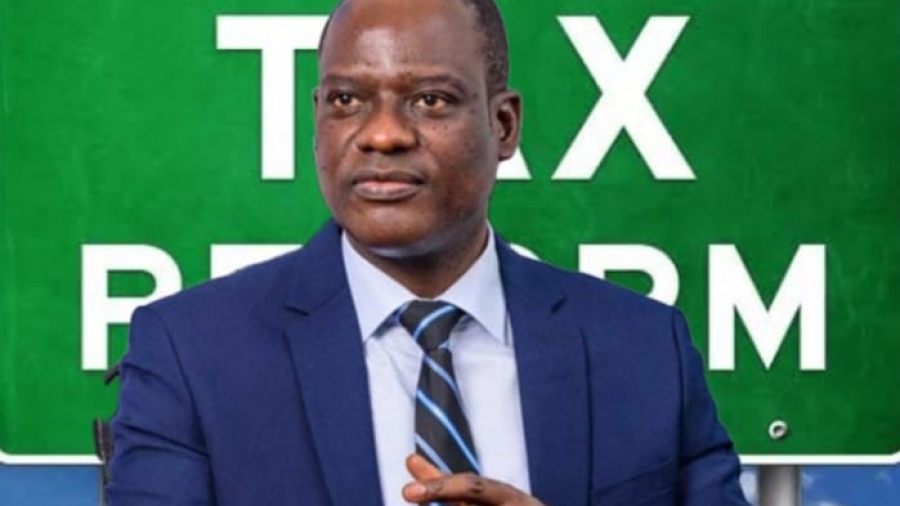
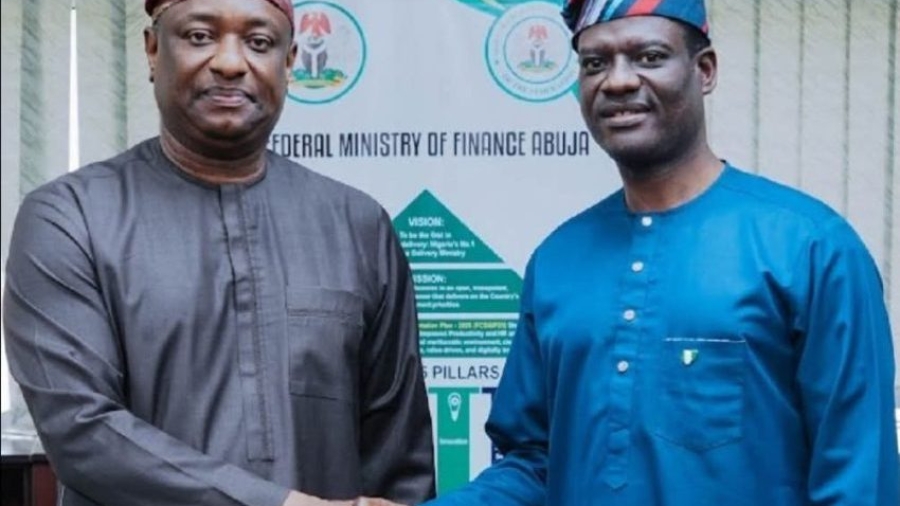
The Honourable Minister of Finance and Coordinating Minister of the Economy, Mr Wale Edun today in his office signed the Presumptive Tax Regulations framework, marking a significant milestone in Nigeria’s tax reform journey.


The Minister described the framework as  simple, clear and fair, with a focus on economic inclusion, noting that, the reforms aim to protect small businesses and broaden the tax base without raising rates.


He stated that with the signing of these regulations, we are “transitioning from regular to structured implementation of the tax reforms” adding that the regulations provide a simple, increased transparent, fairness, clarity, economic inclusion, consistency and prevention of arbitrary taxation and equitable framework for the administration of presumptive tax, particularly within the informal sector.


“These Regulations according to him are anchored on  Mr. President’s commitment to “taxing prosperity, not poverty,”


He highlighted that the Presumptive Tax Regulations introduced a uniform framework for sub-national implementation are designed to:

Exempt nano and small businesses with annual turnover of ₦12 million and below from tax, ensuring protection for struggling entrepreneurs;

Introduce a modest 1% tax on turnover for other eligible informal sector businesses;

Eliminate cash-based tax collection practices by encouraging technology-driven payment systems;

Prohibit the mounting of roadblocks or any informal means of tax enforcement;

Facilitate seamless on-boarding of informal businesses into the formal economy through structured digital platforms.


The Minister disclosed that Nigeria’s economy recorded growth above 4% in the last quarter of 2025, describing it as positive momentum.


He emphasized that the government is targeting 7% GDP growth in the immediate term, as part of a broader strategy to achieve President Tinubu’s vision of a $1 trillion economy by 2030.


He stressed that formalizing the informal sector is central to achieving inclusive and sustainable economic growth. In his words, “We must grow the Nigerian economy across all sectors , micro, small, medium and large enterprises; domestic and foreign investors; and Nigerians in the diaspora. A fair and predictable tax system is critical to that growth,” he added.


The Minister  acknowledged the role of the Joint Tax Board in ensuring coordinated implementation across federal and sub-national tax authorities, assuring stakeholders that enforcement would be monitored closely to guarantee fairness and consistency nationwide, and also reiterated that the presumptive tax regime framework will protect small businesses and help them to grow thereby  improving the efficiency and fairness of the country’s tax system.


Earlier, the Executive Secretary of the Joint Revenue Board, Mr Olusegun Adesokun said the new rules are meant to put an end to informal coersion and fragmented tax practices, particularly at the sub national level.


He further explained that the “guildlines bans all forms of cash collection by tax authorities”. It also bans the mounting of roadblocks for the collection of taxes, he added.


In his remarks,  Mr Joseph Tegbe, the Chairman, National Tax Policy Implementation Committee (NTPIC) said  with the signing of these Presumptive Tax Guidelines, we have moved from legal provision to operational reality.


The tax reforms being championed by President Bola Ahmed Tinubu, is not about imposing new burdens but restoring order where there has been fragmentation, replacing arbitrariness with transparency, and building a tax system that reflects the realities of Nigeria’s informal economy while promoting fairness and inclusion he stated.


He emphasized that the National Tax Policy Implementation Committee will continue to work closely with tax authorities to ensure disciplined rollout, operational consistency, and safeguards against arbitrary assessments.


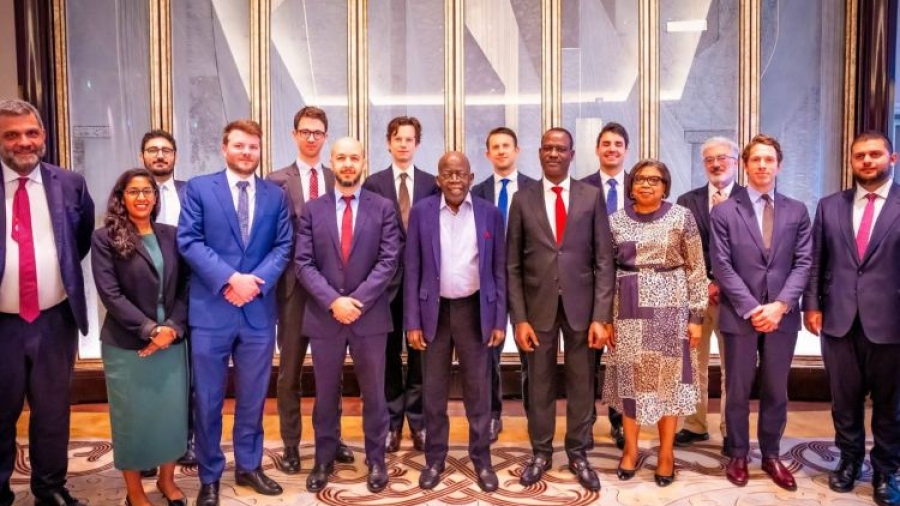
In attendance at the signing were Executive Chairman of the Nigerian Revenue Service, Executive Secretary of the Joint Revenue Board, Chairmen of other Tax Authorities, Sub- Committee Chairmen, Stakeholders and members of the National Tax Policy Implementation Committee.


Signed

Amadi Uloma Nneka

Assistant Director, Information and PR

WhatsApp Image 2026-03-02 at 7.10.09 PM

FG Targets 12% Annual Growth To Hit $1 Trillion Economy Landmark – Uzoka-Anite

The Federal Government has outlined a rigorous roadmap to transition Nigeria into a $1 trillion economy, asserting that the target is a “specific, measurable decision” rather than a mere political slogan.

​Speaking at the 2026 Financial Correspondents Association of Nigeria (FICAN) Annual General Meeting, with the theme “Actualizing President Bola Ahmed Tinubu’s $1 Trillion Economy Agenda” held today in Abuja, the Honourable Minister of State for Finance, Dr Doris Uzoka-Anite, revealed that achieving this milestone will require the nation to maintain a sustained GDP growth rate of between 10% and 12% annually over the coming decade.

​The Minister, who was represented by Amadi Uloma, Assistant Director of Information and Public Relations, noted that while the current GDP stands at approximately $375 billion, the administration is committed to the “ambitious targets that move nations.”
​The first wave according to the Minister is Restoring Market Integrity:
​Reflecting on the administration’s journey since 2023, the Minister highlighted that Nigeria’s economic fundamentals were structurally distorted, some also considered it politically survivable, but necessary decisions of President Bola Ahmed Tinubu to remove the fuel subsidy which she said previously consumed over $5 trillion annually and the unification of the foreign exchange market .

​She explained that ”Investors could not trust the signals our market was sending,” but, “Today, those reforms are being vindicated. In January 2026, Dr. Doris, disclosed that S&P Global Ratings revised Nigeria’s outlook to positive, affirming a high level of confidence in our fiscal, economic and monetary trajectories.”
​The “Second Wave”: DGAS Framework: the Minister disclosed that
​the government is currently transitioning into a “second wave” of reform known as the Disinflation and Growth Acceleration Strategy (DGAS). This nine-pillar framework is designed to move Nigeria away from a consumption-based economy toward productive capacity.
​Key pillars of the DGAS include:
​Industrialization: Moving away from exporting raw materials (which currently account for 70% of inputs) to domestic processing, modeled after the success of the Dangote Refinery.
​Infrastructure: Expanding broadband, data centers, and the Nationwide Energy Expansion Program (solar, hydro, and gas).
​Human Capital: A pipeline targeting technical training for 3 million young Nigerians annually.
​Consumer Credit: Launching a platform to make financing for housing, education, and healthcare accessible to ordinary citizens.

Global Re-entry and Compliance
​The Minister noted significant progress in international financial standing, highlighting Nigeria’s recent exit from the Financial Action Task Force (FATF) grey list.
​”This matters because it directly reduces compliance costs for foreign investors,” the Minister explained. Adding that “Capital flows more freely to countries that international regulators trust.”

She concluded with a commitment to transparency, noting that the Ministry of Finance now treats investment expenditure as a distinct pillar of public finance to ensure every naira spent builds long-term value for the Nigerian people, informing that “President Tinubu’s $1 trillion economy agenda will not be built through government action alone”. “It will be built through the confidence of investors who trust our institutions, the productivity of entrepreneurs who can access capital and markets, the skills of young Nigerians who find opportunity rather than frustration, and the informed engagement of citizens who understand what their country is trying to do and why”.

Earlier, the FICAN Chairman, Mr Bassy Udo, speaking during his welcome remarks, emphasized the need for bold reforms asserting that “reforms is a foundation to Nigeria’s economic transformation”.
He added that to achieve Nigeria’s economic ambitions, particularly in becoming a $1 trillion economy requires bold reforms.
Mr Udo further called on key players from the financial sectors of the economy to ensure that macroeconomic variable are strengthened.

The Meeting was attended by partners and key stakeholders of the Ministry of Finance.

Signed
Amadi Uloma Nneka
Assistant Director, Information and PR
February 25, 2026
www.finance.gov.ng

HMF_2

Nigeria Moves to Safeguard Petroleum Revenues as Implementation of Executive Order 9 Begins

Nigeria Moves to Safeguard Petroleum Revenues as Implementation of Executive Order 9 Begins

On February 26, 2026, the Implementation Committee for Executive Order 9 of 2026 held its inaugural meeting. This meeting was held in pursuance of Executive Order 9 of 2026, issued by President Bola Ahmed Tinubu, to safeguard Federal revenues and strengthen the management of petroleum revenue flows.

The Committee reaffirmed the President’s directive that revenues accruing to the Federation from petroleum operations must be handled in a manner that upholds constitutional principles, protects revenues accruable to the Federation, and supports the fiscal stability of all three tiers of government.

In line with the President’s directive, NNPC Limited shall cease, with immediate effect, the collection of the 30% management fee and the 30% frontier exploration fund deductions from profit oil and profit gas under Production Sharing Contracts (PSCs). Additionally, all remittances of gas flare penalties into the Midstream and Downstream Gas Infrastructure Fund (MDGIF) are suspended with immediate effect, in line with the Executive Order.

With respect to Section 2, Sub-section 3 of the Executive Order on direct payments by contractors into the Federation Account, the Committee agreed that this transition must be implemented in a manner that respects existing contractual and financing arrangements, and maintains investor confidence. For this reason, the Committee approved a defined transition period for the operationalisation of direct payments by contractors of profit oil, royalty oil, and tax oil into the Federation Account. Until the Committee issues detailed guidelines, contractors will continue to remit under the current process. During the transition period, the Committee will issue clear, standardised guidance to ensure an orderly changeover.

To this end, the Committee approved the establishment of a Technical Subcommittee to:

(i) develop the detailed guidelines for the transition to direct remittance within three (3) weeks, and (ii) commence a review of the Petroleum Industry Act (PIA) to address structural and fiscal anomalies that weaken Federation revenues.

The Technical Subcommittee will be led by the Special Adviser to the President on Energy, and will include the Solicitor-General of the Federation and Permanent Secretary Federal Ministry of Justice, the Chairman of the Nigeria Revenue Service, and the Chairman of the Forum of Commissioners of Finance, representatives of the Minister of State Petroleum Resources, Oil, with secretarial support from the Budget Office of the Federation.

The Committee will continue to provide coordinated guidance and timely updates as implementation progresses. It commends the cooperation of all stakeholders in advancing the President’s efforts to ensure that Nigeria’s petroleum resources deliver tangible, measurable benefits to citizens across the Federation.

Signed:
Mr. Wale Edun
Honourable Minister of Finance and Coordinating Minister of the Economy/Chairman of the Implementation Committee

HMF_2

Nigeria Records Over 4% Gdp Growth in Q4 2025, Signaling Broad-Based Economic Growth and Momentum

The Honourable Minister of Finance and Coordinating Minister of the Economy, Mr. Wale Edun, today welcomed the latest national economic data from the National Bureau of Statistics (NBS) confirming that Nigeria’s real GDP grew by 4.07% in the fourth quarter of 2025 (Q4 2025), marking the second time in a decade—excluding the immediate post-pandemic rebound—that quarterly growth has surpassed the 4% threshold.

This figure follows the 4.23% growth recorded in Q2 2025 and represents a clear acceleration from the 3.76% posted in Q3 2024. The performance underscores strengthening macroeconomic stability and the tangible impact of the Federal Government’s economic reform programme under the leadership of President Bola Ahmed Tinubu.

The Honourable Minister notes that the growth recorded in Q4 2025 was driven by sustained expansion across all three major sectors of the economy:

Agriculture expanded by 4.0%, up significantly from 2.54% in Q4 2024, reflecting improved security in food-producing regions, enhanced access to inputs, and targeted productivity interventions.

Industry grew by 3.88%, compared to 2.49% in the corresponding period of 2024, supported by improved foreign exchange liquidity, energy sector reforms, and renewed investor confidence.

Services recorded 4.15% growth, demonstrating resilience and continued expansion in finance, telecommunications, trade, and technology-driven segments.

Notably, approximately 30 subsectors recorded growth rates above 3.0%, underscoring the scope and structural depth of the expansion. This signals that growth is no longer concentrated in isolated segments but increasingly diversified across the economy.

Further figures released by the NBS show that, for the full year 2025, Nigeria’s real GDP grew by 3.87%, improving on the 3.38% recorded in 2024. Consequently, the size of the Nigerian economy rose to ₦441.5 trillion, up from ₦372.8 trillion in 2024.

This expansion reflects strengthening fundamentals, improved fiscal coordination, disciplined expenditure management, and reforms aimed at restoring macroeconomic credibility.

The Honourable Minister further notes that this latest data sends a strong signal to foreign investors, multilateral institutions, and global economic stakeholders that Nigeria’s reform trajectory is gaining traction and is being consolidated. He further highlighted the fact that with improving macroeconomic coordination, strengthening revenue mobilisation, enhanced transparency in public finance, and ongoing structural reforms, Nigeria is positioning itself as a stable and competitive destination for long-term capital.

The Ministry of Finance reiterates its commitment to disciplined reform implementation, strategic coordination across government institutions, and transparent engagement with domestic and international stakeholders.

Signed:

Amadi Uloma Nneka
Assistant Director, Information and Public Relations
February 27, 2026
www.finance.gov.ng

WhatsApp Image 2026-03-h02 at 7.59.36 PM

FG Unlocks Game-Changing Reforms in Agricultural Insurance to Boost Food Security

The Honourable Minister of State for Finance Dr Doris Uzoka-Anite today in her office in Abuja received the Honourable Minister of State for Agriculture, Aliyu Sabi Abdullahi, to unlock game-changing reforms in agricultural insurance and Cooperatives.

Discussions focused on two strategic initiatives: reform and recapitalization of the Nigerian Agricultural Insurance Corporation and the Renewed Hope Cooperative Reform Programme.

Dr Uzoka-Anite stated that Agricultural insurance plays a pivotal role in de-risking food production, particularly for smallholder farmers who form the backbone of Nigeria’s food system.

She emphasized that strengthening NAIC within the evolving regulatory landscape, including the Nigerian Insurance Industry Reform Act, is critical to improving resilience and financial sustainability.

At the Ministry of Finance, Dr Uzoka-Anite said, we view agricultural risk mitigation not merely as sectoral reform but as an economic stabilizer with significant GDP impact. We stand ready to support and look forward to reviewing the detailed proposal for coordinated fiscal and regulatory action

These strategic reforms, the Minister added,
underscore Nigeria’s commitment to transforming agriculture into a resilient, market-driven sector, boosting food security, and driving inclusive economic growth.

Signed
Office of the Honourable Minister of State for Finance
February 23, 2026
www.finance.gov.ng

HMsF

Tinubu’s Oil Earnings Order Will Boost FAAC Revenue, Says Uzoka-Anite

The Honourable Minister of State for Finance, Dr. Doris Uzoka-Anite has commended President Bola Ahmed Tinubu’s executive order on oil earnings remittance, saying it will boost FAAC revenue and promote fiscal discipline.

Dr Uzoka-Anite disclosed this in Abuja on Friday while addressing members of the Federation Account Allocation Committee (FAAC), urging States, Ministries, Departments and Agencies (MDAs) of the Federal Government to prioritise capital expenditure over recurrent expansion.

The Minister commended President Bola Ahmed Tinubu’s executive order mandating direct remittance of certain oil sector revenues to the Federation Account, stating that the presidential executive order would safeguard oil and gas revenues.

She explained that the order would provide regulatory clarity and significantly strengthen revenues accruing to the Federation Account

The Minister described the development as a structural fiscal correction aimed at restoring constitutional discipline to petroleum revenue management and enhancing distributable income across the three tiers of government.

She said that the revenue outlook was improving due to ongoing structural reforms introduced by the Federal Government.

The Minister explained further that the newly implemented tax reform measures are broadening the tax base, improving compliance and enhancing administrative efficiency.

Also, the executive order signed by Mr president on February 13 is reinforcing revenue discipline in the oil and gas sector and reducing leakages, Uzoka-Anite said.

She stated that the order suspends the 30 per cent allocation to the Frontier Exploration Fund (FEF), suspends the 30 per cent management fee on oil and gas profit payable to NNPC Limited. It also directed that gas flare penalties be paid into the federation account, and mandated full remittance of petroleum revenues without unconstitutional deductions.

Dr Uzoka-Anite stated further that the reform marks a shift from a retention-based oil revenue model to a gross remittance, federation-first model.

The implications for FAAC are very significant, more oil and gas profit will now flow directly into the federation account. Gas flare penalties will become distributable revenue, and previously retained management fees will no longer reduce remittable inflows, she said.

She emphasised that the reforms were expected to result in higher monthly gross inflows into the federation account, and increased allocations to federal, state and local governments.

Dr Uzoka-Anite said that a retrospective audit of the FFF, the Midstream and Downstream Gas Infrastructure was due, and NNPC management fee deductions could lead to recoveries that may provide a one-off fiscal boost.

While welcoming the improved revenue outlook, the Minister cautioned against the risks associated with sudden liquidity injections.

Experience shows that when revenues rise sharply and are distributed fully and immediately, large liquidity injections can increase inflationary pressures, complicate monetary management and reduce the real purchasing power of allocations

She stated that excess aggregate demand, exchange rate pressure, asset price distortions and inflationary risks could arise if increased inflows were not carefully managed.

To mitigate such risks, the Minister proposed phased disbursement of one-off recoveries and
suggested that retrospective recoveries be staggered rather than injected into the economy in bulk, with a portion temporarily warehoused in a stabilisation buffer.

She also recommended strengthening the excess crude and stabilisation buffer mechanism to channel part of incremental inflows into a fiscal stabilisation window.

This could offset revenue shortfalls in weaker months and reduce procyclicality in spending

She said that enhanced coordination with the CBN would be pursued to align fiscal injections with liquidity management tools and support open market operations where necessary. She called for investment in infrastructure, agriculture, energy and other productive sectors, and avoid unsustainable wage or consumption spikes.

Productive spending expands supply capacity and mitigates inflation, she said.

Dr Uzoka-Anite also announced plans to introduce monthly revenue transparency dashboards, production-to-remittance reconciliation reporting, and clear reporting of incremental inflows arising from tax reforms and the executive order.

The Minister emphasized prudent management of increased revenue, urging states and MDAs to prioritize capital expenditure over recurrent expansion, investing in infrastructure and productive sectors to drive growth and mitigate inflation.

Signed
Amadi Uloma Nneka
Assistant Director, Information and Public Relations
February 21, 2026

www.finance.gov.ng

The Honourable Minister of Finance and Coordinating Minister of the Economy, Wale Edun with the Honorable Minister of Budget and National Planning, Senator Atiku Bagudu (rt), Honourable Minister of State for Finance, Dr. Doris Uzoka-Anite, Dr. Iyabo Masha, Director and Head of the Secretariat of the G-24 and the CBN Governor, Dr. Olayemi Cardoso at the G-24 2026 Technical Group meeting today in Abuja.

Nigeria Moving from Costly Foreign Debt to Private Capital – Edun

The Honourable Minister of Finance and Coordinating Minister of the Economy, Wale Edun, has said that Nigeria was deliberately shifting from expensive external borrowing to a growth model anchored on private capital and domestic reforms.

The Minister stated this at the opening session of the G-24 Technical Group Meeting with the theme: “Mobilizing Finance to promote sustainable, Inclusive, and Job – Rich Economic Transformation” held today in Abuja.

Edun, while delivering a keynote address on the global economy and the need for stronger South-South cooperation said “Nigeria is deliberately shifting away from a model overly reliant on expensive external borrowing toward a more resilient growth framework powered by domestic reforms, private capital, and diversified financing instruments,”

He explained that the new approach was in line with evolving global development finance priorities that emphasis innovative financing, blended instruments and expanded concessional windows, adding that Nigeria is targeting an average medium-term growth of seven per cent, which would require raising the investment-to-GDP ratio to at least 30 per cent.

“With the current public sector’s financing capacity at roughly 5 per cent of GDP, the strategy emphasizes attracting private capital through structured PPPs, optimizing public assets, and creating bankable, de-risked investment opportunities,” he said.

The Minister noted that Nigeria’s reform programme under President Bola Tinubu’s administration was anchored on a three-phase agenda of market correction, stabilization and growth acceleration, reiterating that over the past two years, the administration had implemented “bold, politically difficult but necessary reforms aimed at restoring macroeconomic stability,” adding that the measures had laid the groundwork for a more competitive and resilient economy.

He noted that early outcomes of the reforms were becoming evident, with investor sentiment gradually recovering and significant capital commitments returning to the country. He added that “The reform path has attracted global recognition, and investor sentiment is steadily recovering. This renewed confidence according to him is reflected in the return of significant capital commitments to Nigeria,”

Edun described the current global environment as one defined by fragmentation, geopolitical rivalry and weakening multilateral institutions, warning that deepening geoeconomic confrontation could reduce global output by two percentage points and shrink global trade by 2.3 per cent, emphasizing that emerging markets and developing economies were particularly vulnerable, noting that over a quarter of them had already lost access to international capital markets, while more than half of low-income countries were in or approaching debt distress.

He hinted that “Through broad-based tax reforms, implementation of a modernized tax law, and improvements in compliance and automation, including the National Single Window initiative, Nigeria is set to raise its tax-to-GDP ratio to 18 per cent in the medium term.

Edun stressed that the era of waiting for external capital flows to drive development was over, urging countries in the Global South to strengthen collaboration, emphasizing that “The era of waiting for trickle-down prosperity from the North has passed. The future belongs to regions that collaborate, innovate, and integrate with purpose,”.

The Minister called on members of the G-24 to advocate reforms of the global financial architecture, including strengthening the IMF’s global financial safety net, expanding concessional lending by multilateral development banks and prioritizing local currency financing.

According to him, such reforms are critical to support countries that have lost access to international capital markets and to close the widening Sustainable Development Goals financing gap.

He urged G-24 members to use the meeting to harmonize their positions and present a unified voice in shaping a more inclusive and resilient global financial system.

The Central Bank of Nigeria (CBN) Governor Olayemi Cardoso during his keynote speech emphasized on the critical challenges facing the global economy and how emerging economies can leverage policy coordination, mutual trade and investment to build resilience.

He also explained the need for urgent reforms in digital cross-border payment systems and how it can be harnessed to promote and drive inclusive growth and strengthen global financial stability, highlighting Nigeria’s efforts to modernize its regulatory and supervisory frameworks, including strengthening oversight of payment infrastructure providers and enhancing anti-money laundering measures.

Cardoso also stressed the importance of transparency, credibility, and cooperation among African nations to build resilient financial systems.

Earlier, in her opening remarks, Director and Head of Secretariat of the G-24, Dr Iyabo Masha, said the global economy was experiencing “measured resilience but constrained ambition,” warning that emerging market and developing economies must move beyond recovery to restore sustainable growth paths.

She said that although inflation had moderated in some economies and supply disruptions had eased, “resilience is not the same as robustness,” noting that global conditions remained fragile.

Masha said global merchandise trade growth for 2026 was projected at just 0.5 per cent, reflecting the cumulative impact of tariffs and policy uncertainty, a development she said would weaken external demand and slow technology diffusion, adding that policy space for emerging and developing economies was tightening as debt service obligations absorbed a growing share of revenues, with external public debt service reaching $487bn in 2023.

According to her, near-term risks include renewed inflation or supply shocks, abrupt tightening of global financial conditions, deepening trade fragmentation, prolonged debt distress and erosion of human capital.

She urged policymakers to strengthen fiscal and monetary frameworks, expand domestic resource mobilisation, prioritise climate adaptation and human capital development, and deepen regional trade and investment partnerships.

Signed
Amadi Uloma Nneka
Assistant Director (Information and Public Relations)
www.finance.gov.ng

The Honourable Minister of Finance and Coordinating Minister of the Economy, Wale Edun with the Honorable Minister of Budget and National Planning, Senator Atiku Bagudu (rt), Honourable Minister of State for Finance, Dr. Doris Uzoka-Anite, Dr. Iyabo Masha, Director and Head of the Secretariat of the G-24 and the CBN Governor, Dr. Olayemi Cardoso at the G-24 2026 Technical Group meeting today in Abuja.


The Honourable Minister of Finance and Coordinating Minister of the Economy, Wale Edun flanked by the Honorable Minister of Budget and National Planning, Senator Atiku Bagudu (rt), Dr. Iyabo Masha, Director and Head of the Secretariat of the G-24 and the CBN Governor, Olayemi Cardoso at the G-24 2026 Technical Group meeting today in Abuja.


WhatsApp Image 2026-02-19 at 9.39.37 AM (1)

FG: Nigeria’s Investment Budgeting Will Be KPI Driven, Performance Enforced, And Built to Unlock A 1 Trillion Dollar Economy

The Honourable Minister of State for Finance, Dr Doris Uzoka-Anite, has reaffirmed the Federal Government’s commitment to a new Investment Budgeting approach that prioritises implementation discipline, measurable performance outcomes, and market-led governance structures to unlock Nigeria’s target of building a 1 trillion dollar economy.

Speaking during a strategic engagement with the Chief Executive Officer of the Nigerian Economic Summit Group (NESG), Dr Tayo Aduloju, Dr Uzoka-Anite emphasised that Nigeria must shift away from models that transfer critical infrastructure assets to operators without the technical capacity, capital depth, or incentive structure required to deliver results.

“Implementation is key. Government’s role is to lead the framework, design the policy, support and catalyse the private sector, and put money behind it. But performance must be measurable. There must be clear metrics to measure output, jobs and income generation, and there must be consequences. If performance is not delivered, we must be able to withdraw support or claw back what has been provided,” she said.

The Minister noted that past outcomes in certain sectors underline the urgency of a new performance regime. She cited persistent inefficiencies and weak investment incentives as examples of what happens when governance and accountability are misaligned with service delivery.

Dr Uzoka-Anite disclosed that the Ministry is engaging with the Ministry of Finance Incorporated (MOFI) to review government’s equity positions in certain strategic assets, strengthen oversight, and ensure that shareholding translates into enforceable performance. She explained that the Investment Budgeting framework is designed around a KPI-based accountability system that links government support to transparent performance targets and measurable national outcomes.

In response, Dr Aduloju welcomed the direction of reform and underscored the need for a competitive governance layer to ensure optimal performance of national assets. Drawing on international best practice, he referenced the use of competitive asset councils in the Middle East that evaluate projects against national performance benchmarks and enforce strict entry and exit rules based on delivery.

Dr Uzoka-Anite agreed that Nigeria can adapt such governance mechanisms. She outlined a pathway that combines stronger market discipline with the state retaining a minority equity position, while enabling technically competent private investors to drive performance under competitive pressure and global standards.

To support capital mobilisation at scale, the Minister also revealed plans to deploy new investment strategies that strengthen Nigeria’s financial base and channel long-term funding into priority sectors. She clarified that the approach is centred on investment, not grants, and will be structured to crowd in institutional capital.

As part of this effort, Dr Uzoka-Anite announced plans to launch a multi-sector umbrella fund with multiple sub-funds targeted at key sectors of the economy. The platform is expected to broaden participation for risk-averse institutional investors, including pension funds, by enabling indirect exposure through professionally managed vehicles with robust governance and risk management.

The engagement reflects the Federal Government’s continuing consultations with private sector leaders to refine an Investment Budgeting framework that delivers measurable national outcomes, accelerates productivity, and deepens investment into real-economy growth.

Signed
Office of the Honourable Minister of State for Finance
February 19, 2026
www.finance.gov.ng

WhatsApp Image 2026-02-19 at 11.00. AM

FG Introduces Investment Budgeting to Drive Economic Growth

In its avowed determination to accelerate Nigeria’s economic growth and development, the Federal Government has introduced investment budgeting as a key component of the 2026 Budget. This innovative approach marks a decisive shift in how public finance is structured to drive long-term growth and development.

Speaking at the National Economic Council in Abuja on Monday, and during the 2026 Budget defence sessions, the Honourable Minister of State for Finance Dr. Doris Uzoka-Anite disclosed that President Bola Ahmed Tinubu mandated the inclusion of Investment Budgeting as a foundational pillar of the 2026 Budget design. This directive, she said, positions the budget not only as a fiscal document but as a growth execution tool aligned with the Renewed Hope National Development Plan 2026 to 2030.

The Minster explained that the introduction of Investment Budgeting reflects the President’s broader economic strategy to move Nigeria beyond stabilisation and into a sustained phase of accelerated, inclusive growth. It recognises that achieving Nigeria’s ambition of a one trillion dollar economy requires more than recurrent spending and traditional capital allocations. It requires deliberate, structured investment that mobilises private capital at scale.

She explained further that investment budgeting introduces a third pillar to public finance management, alongside revenue and expenditure. While recurrent expenditure sustains government operations and capital expenditure builds public assets, investment budgeting is designed to deliberately crowd in private capital, de-risk priority sectors, and generate long-term economic returns through productive assets

Under this framework, the said, government resources are deployed strategically to unlock investment in infrastructure, agriculture, manufacturing, energy, housing, digital infrastructure, transport, and logistics. Rather than government acting as the sole financier of development, the state becomes the catalyst, using limited public funds to mobilise significantly larger pools of domestic and international private capital.

Dr. Uzoka-Anite emphasised that this approach is essential given Nigeria’s fiscal realities. Public revenues remain constrained, debt service obligations limit fiscal space, and the country’s infrastructure financing needs far exceed what the public balance sheet alone can support. At current levels of public infrastructure spending, Nigeria would require more than a century to close its infrastructure gap. Investment Budgeting addresses this constraint directly by making private capital mobilisation a core feature of budget design, Uzoka-Anite stated.

The framework also aligns closely with the Domestic Growth Acceleration Strategy and the Renewed Hope National Development Plan, both of which seek to translate macroeconomic stabilisation into broad-based production, job creation, exports, and sustainable revenue growth. By embedding Investment Budgeting into the 2026 Budget, the Tinubu Administration has institutionalised a mechanism that shifts Nigeria from incidental growth to intentional growth.

In practical terms, Investment Budgeting focuses exclusively on growth-generating, income-producing assets. It integrates private sector participation from the project design stage, leverages innovative financing tools such as public private partnerships and blended finance, spreads costs over the life of assets, and creates dedicated revenue streams to support debt service and investor returns.

This reform represents another landmark intervention under President Tinubu’s leadership, following difficult but necessary stabilisation measures including fuel subsidy removal and foreign exchange reforms. With macroeconomic credibility gradually restored, Investment Budgeting provides the bridge from reform to results.

As articulated by Dr. Uzoka-Anite at the National Economic Council, Investment Budgeting is not optional. It is essential to achieving the scale of growth required to lift incomes, create jobs, and deliver lasting prosperity to Nigerians under the Renewed Hope Agenda.

With this bold move, Nigeria is poised to unlock new growth avenues, create jobs, and improve living standards, underscoring President Tinubu’s commitment to transforming Nigeria’s economy and delivering prosperity for all Nigerians.

Signed
Office of the Honourable Minister of State for Finance
February 10, 2026
www.finance.gov.ng

HMF_2

President Tinubu Issues Executive Order to Safeguard Federation Oil And Gas Revenues And Enhance Regulatory Clarity

Last week His Excellency President Bola Ahmed Tinubu, GCFR, signed an Executive Order aimed at realigning oil and gas revenue flows with constitutional requirements. The Order seeks to strengthen fiscal transparency, clarify regulatory mandates, and enhance revenues accruing to the Federation from the oil and gas sector.

The Executive Order reinforces the provisions of the 1999 Constitution of the Federal Republic of Nigeria, which vest ownership of mineral resources in the Federation and require that all revenues derived from those resources be paid into the Federation Account for appropriation in accordance with established constitutional and statutory rules.

In line with these principles, the Order addresses certain fiscal and structural arrangements introduced under the Petroleum Industry Act (PIA) 2021 that have resulted in off-budget allocations and deductions from Federation revenues.

Specifically, the Executive Order:

– Suspends the collection of management fees and frontier exploration fees by the Nigerian National Petroleum Company Limited (NNPCL);
– Directs that taxes, royalties, and profit oil under Production Sharing Contracts be remitted directly by contractors to the appropriate fiscal authorities;
– Suspends the payment of gas flare penalties into the Midstream Gas Infrastructure Fund;
– Clarifies the delineation of responsibilities between the Nigerian Upstream Petroleum Regulatory Commission (NUPRC) and the Nigerian Midstream and Downstream Petroleum Regulatory Authority (NMDPRA), providing greater regulatory certainty for operators and investors; and
– Establishes an inter-agency implementation committee, chaired by the Honourable Minister of Finance and Coordinating Minister of the Economy, to ensure coordinated and seamless execution.

The Order has become both necessary and urgent considering the sustained decline in oil and gas revenue inflows into the Federation Account, despite improvements in production levels and favourable market conditions. This shortfall has constrained the government’s capacity to meet budgetary obligations and to finance critical public investments in education, healthcare, and infrastructure.

These challenges are unfolding at a time when Nigeria’s rapidly growing and youthful population is generating increased demand for jobs, quality education, accessible healthcare, and infrastructure that supports inclusive economic opportunity.

At the same time, global energy markets are becoming more competitive and capital increasingly selective. In such an environment, Nigeria cannot afford inefficiencies in the management of its most strategic economic asset.

The fundamental purpose of the nation’s oil and gas sector, including the national oil company, is to convert hydrocarbon resources into sustainable revenues, investment, and economic activity that benefit the broader economy. Achieving this objective requires revenue flows that are transparent, constitutionally compliant, and fully accounted for.

This Executive Order takes immediate effect and serves as an interim corrective measure pending legislative amendments to entrench these reforms in statute. Collectively, these measures represent another significant step toward strengthening fiscal discipline, safeguarding revenue integrity, and ensuring that Nigeria’s natural resources deliver tangible value to citizens, investors, and the economy.

Signed
Amadi Uloma Nneka
Assistant Director, Information and Public Relations
www.finance.gov.ng